

Every year, as summer fades and temperatures begin to drop, the magnificent mountains of northern Pakistan transform into a spectacular landscape of golden, orange, yellow, and red. The poplar trees turn bright golden, apricot orchards display beautiful shades of orange and crimson, and traditional mountain villages become surrounded by breathtaking autumn scenery. Against the dramatic backdrop of snow-covered peaks, including Rakaposhi, Ultar Sar, and the Passu Cones, autumn creates one of the most beautiful natural spectacles in Pakistan.
Known as the Autumn Season in Pakistan, this magical period attracts photographers, nature lovers, adventure enthusiasts, and international tourists who want to experience the extraordinary beauty of Gilgit-Baltistan.
From the famous orchards of Hunza Valley and the peaceful villages of Nagar to the colourful landscapes of Skardu, Ghizer, Phander, and Naltar, northern Pakistan offers countless opportunities to experience autumn at its finest.
Unlike the busy summer travel season, autumn offers a quieter atmosphere, pleasant daytime temperatures, clearer mountain views, and unforgettable photography opportunities. It is also an excellent time to explore local culture, traditional villages, historical forts, and the hospitality of the people of Gilgit-Baltistan.
If you are planning a trip to Pakistan, this comprehensive guide will help you discover the best places to see autumn colours, understand the peak foliage season, prepare for the weather, and plan an unforgettable autumn journey through northern Pakistan.
Quick Answer: When Is the Best Time to See Autumn Colors in Pakistan?
The best time to experience autumn colours in northern Pakistan is generally from late September to early November, with October being the main autumn season.
The peak colours usually appear during the second and third weeks of October, although the exact timing varies depending on altitude, temperature, and annual weather conditions.
- Late September: Higher-altitude valleys such as Upper Gojal, Shimshal, and parts of Ghizer begin changing colours.
- Early October: Naltar, Phander, and upper mountain villages display beautiful autumn scenery.
- Mid-October: Central Hunza, Nagar, and surrounding villages often reach their most colourful period.
- Late October: Skardu, Shigar, Khaplu, and lower Hunza areas offer excellent autumn views.
- Early November: Lower-altitude areas around Gilgit may retain golden foliage, depending on weather conditions.
Travel Planning Tip
For most travellers, planning a visit between 10 October and 25 October offers a good opportunity to experience the autumn season across multiple destinations. However, nature does not follow an exact calendar. The best travel strategy is to keep your itinerary flexible so you can visit whichever valley has the most beautiful colours during your stay.
What Makes Autumn in Pakistan So Special?
Autumn in northern Pakistan is more than just a change of season. It is a complete transformation of the landscape. During summer, the valleys are covered with green fields, fruit orchards, and lush vegetation. As autumn approaches, the leaves gradually change their colours, creating an extraordinary combination of golden trees, traditional stone houses, blue rivers, and snow-covered mountains.
1. Golden Poplar Trees
Poplar trees are among the most recognizable features of autumn in Gilgit-Baltistan. They are commonly planted around agricultural fields, village pathways, roadsides, and residential areas. During October, their green leaves turn brilliant yellow and golden, creating beautiful tree-lined streets and pathways. These golden poplars are particularly photogenic in Hunza, Nagar, and Skardu.
2. Colourful Fruit Orchards
Gilgit-Baltistan is famous for its fruit production, especially apricots, cherries, apples, walnuts, and mulberries. As the season changes, different trees display different autumn shades:
- Apricot trees develop beautiful yellow, orange, and reddish tones.
- Cherry trees add attractive red and orange colours.
- Walnut trees turn golden brown.
- Mulberry trees develop warm yellow and brown shades.
These colourful orchards create a beautiful contrast with traditional Wakhi, Burusho, and Balti villages.
3. Snow-Covered Mountain Peaks
One of the biggest attractions of autumn in Pakistan is the combination of colourful trees and snow-covered mountains. Famous peaks such as Rakaposhi, Ultar Sar, Diran Peak, and the Passu Cones provide spectacular backgrounds for autumn photography. The contrast between golden valleys and white mountain summits creates scenery that is difficult to experience in many other seasons.
4. Clear Blue Skies and Beautiful Mountain Views
October generally brings drier weather to much of northern Pakistan after the summer monsoon period. The reduced humidity and clearer atmospheric conditions can provide excellent visibility of mountain ranges, glaciers, and valleys. For photographers, this means more opportunities to capture beautiful landscapes, particularly during sunrise and sunset.
Best Places to See Autumn Colors in Pakistan
Gilgit-Baltistan is the heart of autumn tourism in Pakistan. Although beautiful autumn scenery can be found throughout the region, some destinations are especially famous for their colourful landscapes. Here are the best places to include in your autumn travel itinerary.
1. Hunza Valley – The Most Famous Destination for Autumn Colors
Hunza Valley is undoubtedly one of the most popular destinations for experiencing autumn in Pakistan. Located along the legendary Karakoram Highway, Hunza is famous for its breathtaking mountain scenery, traditional villages, historical forts, and colourful fruit orchards.
During October, the entire valley transforms into a spectacular landscape of golden poplar trees, orange apricot orchards, and beautiful mountain views. The combination of traditional settlements and dramatic mountain peaks makes Hunza an ideal destination for photographers and nature lovers.
Best Places to See Autumn in Hunza
Karimabad
Karimabad is one of the best places to experience autumn in Hunza. The village offers panoramic views of Rakaposhi, Ultar Sar, and the surrounding mountains. During autumn, the colourful trees around the town create a beautiful atmosphere. Visitors can explore local markets, enjoy traditional food, and visit the famous Baltit Fort.
Altit Village and Altit Fort
Altit is a historic village known for its traditional architecture, narrow streets, and beautiful mountain scenery. During October, the surrounding orchards and trees become colourful, making the village an excellent destination for photography and cultural exploration. Altit Fort is particularly attractive because of its historical architecture and elevated views of the Hunza Valley.
Ganish Village
Ganish is one of the oldest settlements in Hunza and offers a wonderful opportunity to experience traditional architecture and local culture. Its historic houses, wooden mosques, and surrounding trees make it an interesting stop during an autumn tour.
Attabad Lake
Attabad Lake is one of the most famous tourist attractions in Hunza. Its turquoise-blue water creates a beautiful contrast with the golden autumn landscape surrounding the lake. Visitors can enjoy boating when services are operating, photography, sightseeing, and views of the surrounding mountains.


Passu Village and Passu Cones
Passu is one of the most spectacular destinations in Upper Hunza, also known as Gojal Valley. The famous Passu Cones provide a dramatic backdrop to the surrounding villages, rivers, and autumn landscapes. The combination of golden trees, traditional settlements, and rugged mountain peaks makes Passu an unforgettable destination during October.

Gulmit Village – A Hidden Autumn Gem in Hunza
Gulmit, the administrative headquarters of Gojal Valley, is one of the most beautiful traditional villages in Upper Hunza. Surrounded by spectacular mountains and colourful orchards, Gulmit offers visitors an authentic experience of Wakhi culture and village life. During autumn, the poplar and fruit trees throughout Gulmit village turn golden and orange, creating beautiful scenery against the backdrop of the Karakoram Mountains.


Some of the best experiences in Gulmit during autumn include:
- Walking through traditional village streets and colourful orchards.
- Visiting the historic Ondra Poygah viewpoint.
- Exploring the Gulmit Cultural Centre and local handicraft traditions.
- Experiencing traditional Wakhi food and hospitality.
- Enjoying panoramic mountain views from different parts of the village.
- Visiting nearby Passu, Hussaini, and Attabad Lake.
Gulmit is also an excellent place to stay if you want to explore Upper Hunza at a relaxed pace. For accommodation and a memorable local experience, visitors can consider Gulmit Continental Hotel, which provides a convenient base for exploring the attractions of Gojal Valley.
2. Nagar Valley and Hopar – A Paradise of Golden Orchards
Located across the Hunza River, Nagar Valley is another beautiful destination for experiencing autumn in Gilgit-Baltistan. While Hunza receives considerable tourist attention, Nagar offers a quieter atmosphere and magnificent views of the surrounding Karakoram mountains. During autumn, the villages of Nagar become colourful with golden poplar trees, orange apricot orchards, and beautiful mountain scenery.
Top Places to Explore in Nagar
- Hopar Valley: One of the most attractive destinations in Nagar, famous for its glaciers, mountain scenery, and beautiful natural surroundings. During autumn, its surrounding trees and orchards create a wonderful contrast with the rugged mountains and glaciers.
- Minapin Village: A beautiful mountain village and an important starting point for trekking towards Rakaposhi Base Camp. The surrounding orchards and mountain views make it a wonderful destination for autumn photography.
- Rakaposhi Viewpoints: Rakaposhi is one of the most impressive mountain peaks in the Karakoram range. During autumn, golden trees in the foreground create unforgettable landscape photography opportunities.
Nagar is an excellent choice for travellers who want to explore beautiful landscapes away from the busiest tourist areas.
3. Skardu Valley – Experience Golden Autumn in Baltistan
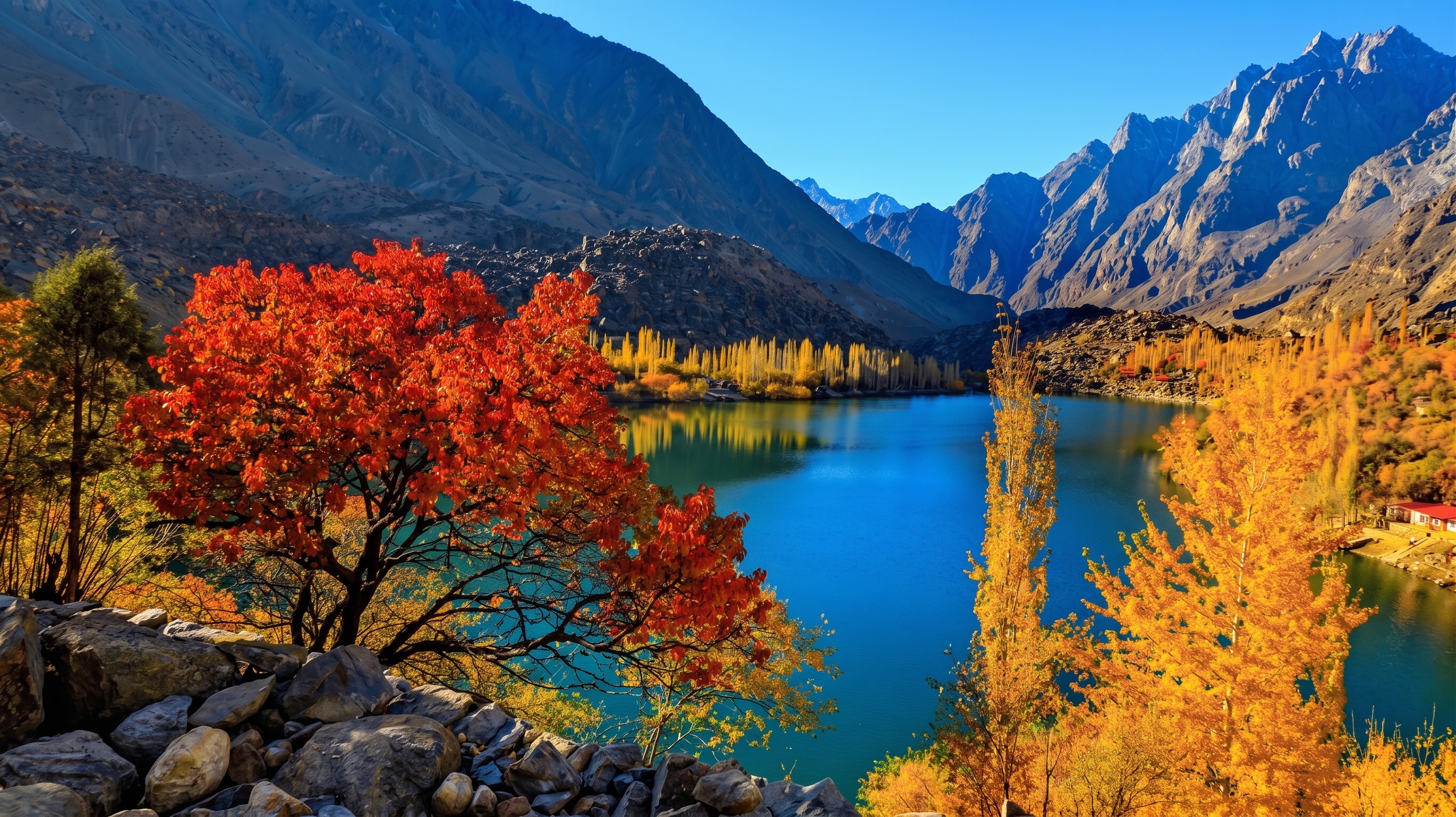
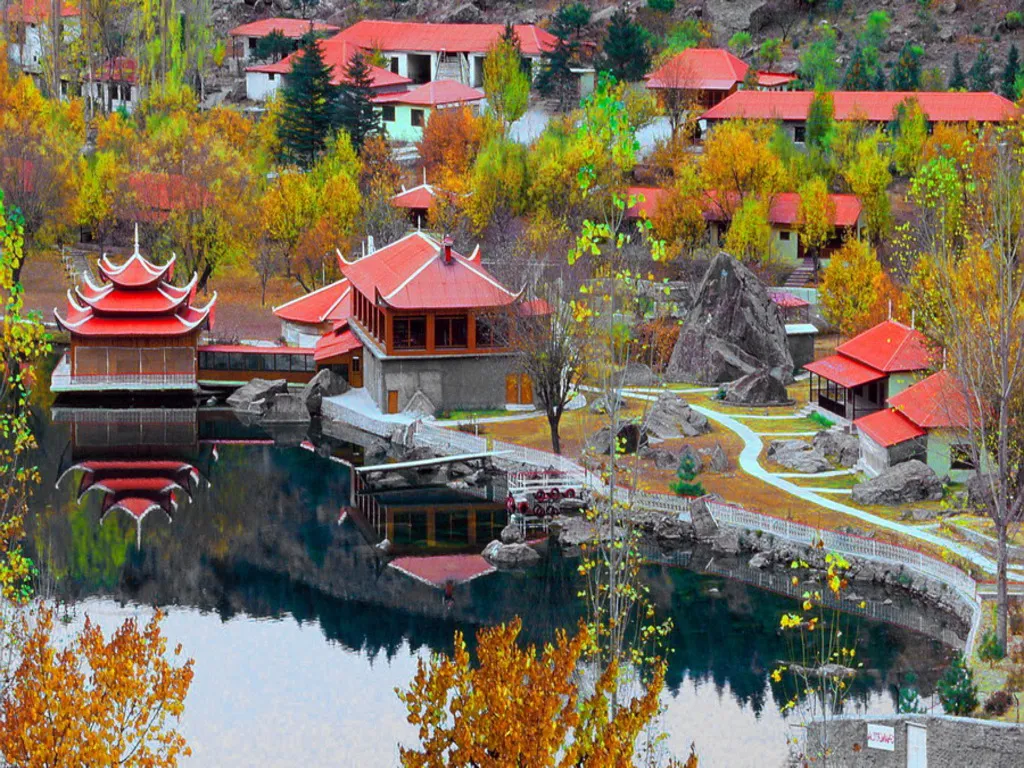
Skardu is another must-visit destination during the autumn season in Pakistan. Located in Baltistan, Skardu offers a completely different landscape compared with Hunza. Instead of narrow green valleys, visitors discover broad mountain valleys, rivers, lakes, cold deserts, historical forts, and traditional Balti villages. During October, the poplar trees and orchards around Skardu, Shigar, and Khaplu turn golden, creating beautiful scenery throughout the region.
Best Places to See Autumn in Skardu
- Skardu City: Becomes particularly beautiful during autumn as the trees along roads, residential areas, and agricultural fields change colours against the surrounding mountain landscape.
- Shigar Valley: Famous for traditional Balti architecture, historical settlements, agricultural landscapes, and the impressive Shigar Fort surrounded by golden poplars.
- Khaplu Valley: Known for beautiful traditional villages, historical architecture, and the famous Khaplu Palace nestled in golden autumn foliage.
- Upper Kachura Lake: Famous for crystal-clear water and surrounding trees adding seasonal colours in a peaceful environment.
- Shangrila Resort and Lower Kachura Lake: One of the most recognized tourist attractions in Skardu, combining lakeside gardens and mountain reflections.
- Katpana Cold Desert: Offers a unique landscape of sand dunes surrounded by mountains and crisp autumn light.
4. Ghizer Valley – Discover Peaceful Autumn Landscapes
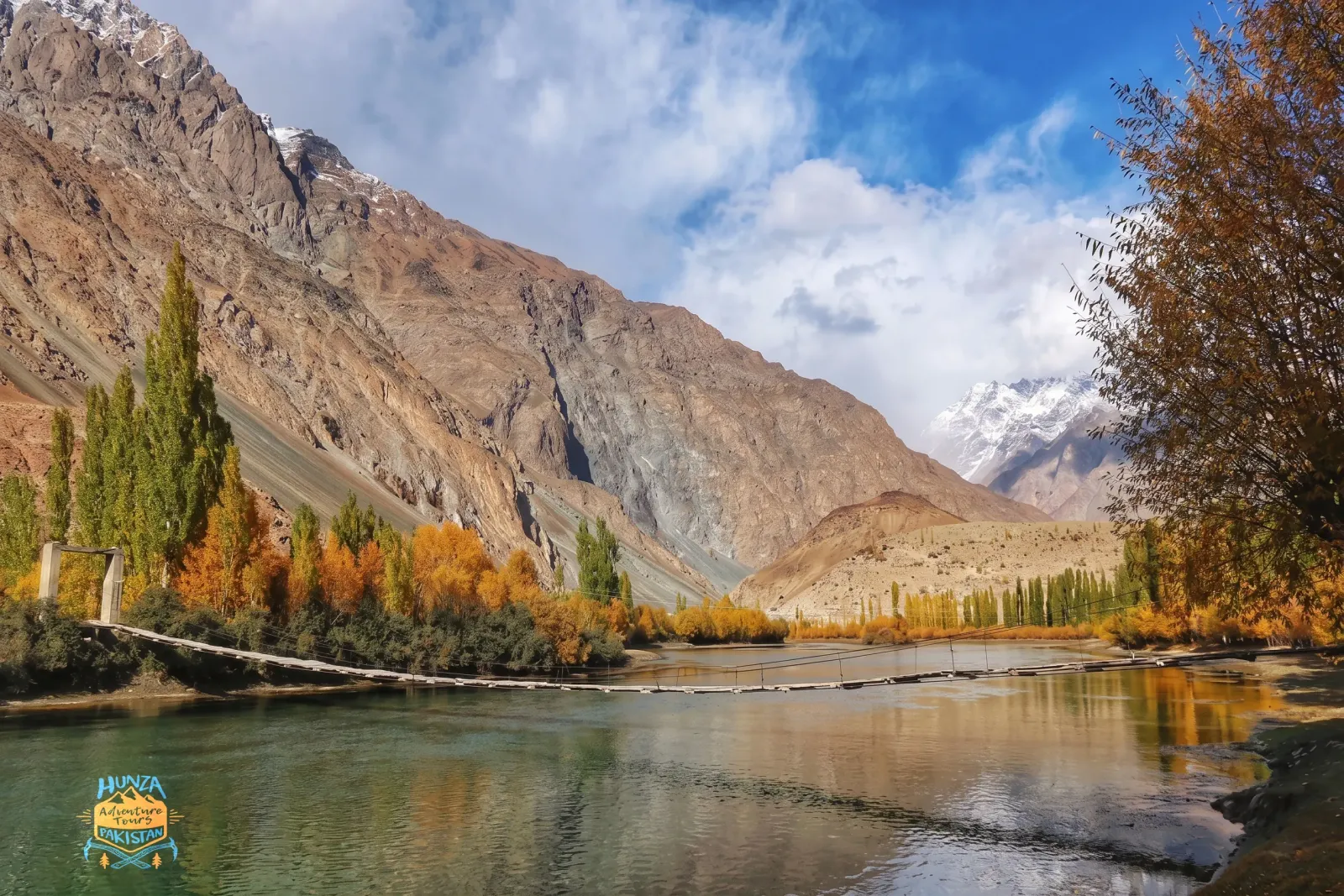
Ghizer District is one of the most beautiful and less crowded regions of Gilgit-Baltistan. Located west of Gilgit, the valley is famous for its rivers, lakes, traditional villages, and spectacular mountain scenery. During autumn, the trees surrounding the villages and waterways turn golden, creating peaceful and colourful landscapes ideal for travellers seeking nature away from crowds.

Best Places to Explore in Ghizer
- Phander Valley: Famous for Phander Lake, whose turquoise water reflects golden trees and surrounding mountains in October.
- Khalti Lake: Clear water, surrounding mountains, and colourful trees make it an attractive stop during an autumn road trip.
- Gupis Valley: Known for its rivers, traditional villages, peaceful atmosphere, and golden agricultural areas.
- Yasin Valley: A remote and scenic valley known for traditional villages and dramatic autumn mountain scenery.
5. Naltar Valley – A Beautiful Autumn Escape Near Gilgit
Naltar Valley is located near Gilgit and is famous for its forests, colourful lakes, and mountain scenery. The valley is particularly attractive during autumn because its higher elevation often means the seasonal colours begin earlier than in central Hunza and lower areas.
- Naltar Lakes: Famous for their distinctive colours and spectacular natural surroundings.
- Naltar Forest: A beautiful area for nature walks and autumn photography combining golden foliage and evergreen vegetation.
- Naltar Wildlife and Mountain Scenery: An opportunity to enjoy the natural environment and surrounding peaks.
Access to Naltar generally requires a suitable vehicle for the mountain road. Road conditions can change with weather, so visitors should check local conditions before travelling.

6. Gilgit City – Enjoy Autumn in the Heart of Gilgit-Baltistan
Gilgit is the regional capital and an important starting point for exploring northern Pakistan. Although many travellers use Gilgit mainly as a transit destination, the city and its surrounding areas also offer beautiful autumn scenery during late October and early November. Gilgit is also an ideal base for exploring Hunza, Naltar, Ghizer, and other surrounding destinations.
Best Time to Visit Different Valleys for Autumn Colors
One important thing to understand before planning an autumn trip is that the colours do not appear everywhere at the same time. The change begins in higher-altitude areas and gradually moves towards lower valleys as temperatures decrease.
| Destination | Approximate Autumn Colour Season |
|---|---|
| Upper Gojal and Shimshal | Late September to mid-October |
| Phander and Upper Ghizer | Late September to mid-October |
| Naltar Valley | Early to mid-October |
| Central Hunza | Mid to late October |
| Nagar and Hopar | Mid to late October |
| Skardu and Shigar | Mid to late October |
| Khaplu | Mid to late October |
| Gilgit and lower valleys | Late October to early November |
These dates are general travel-planning estimates, not guaranteed peak foliage dates. Actual conditions can change every year.
Why Do Autumn Colors Change at Different Times?
The timing of autumn colours depends mainly on elevation, temperature, sunlight, and local weather conditions. Higher-altitude areas generally experience colder temperatures earlier than lower valleys. As a result, trees in Upper Gojal, Shimshal, and parts of Ghizer may begin changing colours before central Hunza.
A few weeks later, the colour transformation becomes more noticeable in Karimabad, Altit, Gulmit, and Nagar. Skardu and some lower-altitude areas may retain their autumn colours later into October and early November. This natural progression creates an excellent opportunity for travellers to explore multiple destinations during one trip.
Autumn Weather in Northern Pakistan
Weather is an important factor when planning a trip to northern Pakistan during October. Generally, autumn offers pleasant daytime conditions, cool evenings, and cold nights, varying significantly with altitude.
- Daytime Temperatures: In many lower and central valleys, daytime temperatures range approximately between 12°C and 20°C, comfortable for sightseeing, village walks, and photography.
- Nighttime Temperatures: Nights become considerably colder during October, approaching freezing in higher-altitude locations such as Naltar and Upper Gojal.
- Rainfall and Snowfall: October is generally drier than summer, though occasional rain and early snowfall are possible at higher elevations.
What Should You Pack for an Autumn Trip?
Layered clothing is the best option because temperatures can change considerably throughout the day. Recommended items include:
- Warm jackets or down jackets, fleece sweaters, and thermal clothing.
- Comfortable walking and hiking shoes, warm socks, gloves, and a winter cap.
- Windproof and waterproof outerwear, sunglasses, and sunscreen.
- Camera equipment, spare batteries, power bank, and charging accessories.
- Personal medicines, basic first-aid supplies, and a small daypack.
Best Photography Spots During Autumn in Pakistan
- Karimabad, Hunza: Capture golden orchards with Rakaposhi and Ultar Sar in the background.
- Altit Fort: Photograph traditional architecture surrounded by autumn scenery.
- Gulmit Village: Explore colourful village streets, orchards, and traditional Wakhi houses.
- Passu: Capture the famous Passu Cones surrounded by autumn landscapes.
- Attabad Lake: Photograph the contrast between turquoise water and golden mountainsides.
- Hopar Valley: Capture mountain glaciers and colourful trees.
- Phander Lake: Photograph golden trees reflected in the beautiful lake.
- Shigar Fort: Combine historical architecture with the golden autumn landscape.
- Khaplu Palace: Capture traditional Balti architecture and seasonal colours.
- Naltar Valley: Explore forests, lakes, and mountain landscapes.
For the best results, shoot during early morning (sunrise & calm reflections), late afternoon (warm golden light), and sunset (dramatic mountain silhouettes), while keeping spare batteries warm in cold weather.
How to Reach Northern Pakistan During Autumn
Most travellers begin their journey from Islamabad, travelling either by air or by road:
- By Air: Flights from Islamabad to Gilgit and Skardu take around one hour and offer spectacular aerial views, though they depend on mountain weather. Keep 1–2 flexible buffer days.
- By Road: The Karakoram Highway connects Islamabad with Gilgit and Hunza (roughly 20–24 hours of driving, often split over two days with stops in Besham or Chilas).
Important Road Conditions: Check latest updates before travelling, as Babusar Pass may close following early snow, Khunjerab Pass has seasonal operating restrictions, and mountain roads can experience temporary closures.
Suggested 7-Day Autumn Tour of Hunza and Gilgit-Baltistan
- Day 01Islamabad to Chilas: Travel along the Karakoram Highway stopping at scenic viewpoints. Overnight in Chilas.
- Day 02Chilas to Hunza: Continue through the Karakoram landscape with views of Rakaposhi and arrival in Karimabad.
- Day 03Karimabad, Altit and Ganish: Explore Baltit Fort, Altit Fort, historic Ganish Village, and local markets.
- Day 04Attabad Lake, Gulmit and Passu: Drive into Upper Hunza to explore Attabad Lake, Gulmit Village, and Passu.
- Day 05Explore Upper Gojal: Enjoy photography, village walks, and Wakhi hospitality in Passu and nearby valleys.
- Day 06Return Towards Gilgit: Travel back along the KKH, stopping at autumn viewpoints along the river.
- Day 07Gilgit to Islamabad: Return to Islamabad by road or domestic flight.
Autumn in Pakistan vs Spring in Hunza: Which Season Is Better?
| Feature | Spring Season | Autumn Season |
|---|---|---|
| Main months | March–April | September–November |
| Main attraction | Cherry and apricot blossoms | Golden and orange foliage |
| Landscape | Fresh green and flowering orchards | Golden, yellow, orange, and red trees |
| Weather | Cool to pleasant | Pleasant days and cold nights |
| Photography | Blossom and fresh landscapes | Golden foliage and snowy peaks |
| Tourist atmosphere | Increasing visitor numbers | Generally quieter than summer |
| Best for | Blossom lovers and nature enthusiasts | Landscape photographers and autumn lovers |
Travel Tips for Visiting Northern Pakistan in Autumn
- Book Your Accommodation in Advance: October is popular in Hunza and Skardu, so reserve rooms early.
- Keep Your Travel Dates Flexible: Foliage varies by valley; flexibility lets you chase peak colours.
- Check Weather and Road Conditions: Always verify local forecasts and road updates before heading into remote valleys.
- Carry Sufficient Cash: Useful in smaller villages and remote areas where ATMs are limited.
- Respect Local Traditions: Dress respectfully and ask permission before photographing local residents.
- Travel Responsibly: Leave no litter and preserve the natural environment.
- Hire Experienced Local Guides: Local guides help uncover hidden viewpoints and cultural experiences.
Frequently Asked Questions About Autumn in Pakistan
1. Which month is best for autumn in Pakistan?
October is generally the best month to experience autumn colours in northern Pakistan. The second and third weeks of October are particularly popular for visiting Hunza, Nagar, and surrounding valleys.
2. When do autumn colours start in Hunza?
Autumn colours in Hunza generally begin appearing in late September and become more noticeable during early October. Central Hunza often reaches its most colourful period in mid-to-late October.
3. What is the best time to visit Hunza for autumn photography?
The period between 10 October and 25 October is a good starting point for planning an autumn photography trip to Hunza, depending on annual weather conditions.
4. Is October a good time to visit Skardu?
Yes. October is an excellent time to visit Skardu, Shigar, and Khaplu because the trees and orchards display beautiful autumn colours. Days are pleasant, while nights are cold.
5. Can I visit Hunza and Skardu in one trip during autumn?
Yes. Both destinations can be combined in one itinerary with sufficient travel time, subject to road conditions and seasonal closures.
6. Does it snow in Hunza during October?
Snowfall is possible at higher elevations and on surrounding mountain peaks during October, though snowfall in the main inhabited valley floors is not guaranteed.
7. Is autumn a good season for international tourists?
Yes. Autumn is an excellent season for international visitors who enjoy mountain scenery, photography, cultural experiences, and road trips, provided they pack for cold nights.
8. What should I wear during an autumn trip to Hunza?
Bring warm jackets, sweaters, thermal clothing, comfortable walking shoes, gloves, and a winter cap. Layered clothing works best.
9. Which is better for autumn colours: Hunza or Skardu?
Hunza is famous for golden orchards, traditional villages, and dramatic Karakoram peaks, while Skardu offers broad valleys, golden poplar avenues, historical forts, and lakes.
10. How many days are enough for an autumn tour of Hunza?
A 5–7 day trip is generally suitable for Hunza and Upper Gojal. Plan extra days if you want to include Skardu or Ghizer.
Plan Your Autumn Tour to Northern Pakistan
Autumn in Pakistan is one of the most beautiful seasonal experiences in the country. From the golden orchards of Hunza and the colourful villages of Nagar to the peaceful lakes of Ghizer and the magnificent landscapes of Skardu, northern Pakistan offers unforgettable scenery during this special time of the year.
Book your Pakistan Autumn Tour with Hunza Adventure Tours and discover the spectacular autumn beauty of Hunza, Gulmit, Passu, Skardu, and other destinations in Gilgit-Baltistan. Experience the golden season of northern Pakistan and create memories that will last a lifetime.

No Thoughts Shared Yet
Be the first to share your thoughts, memories, or questions about this story!