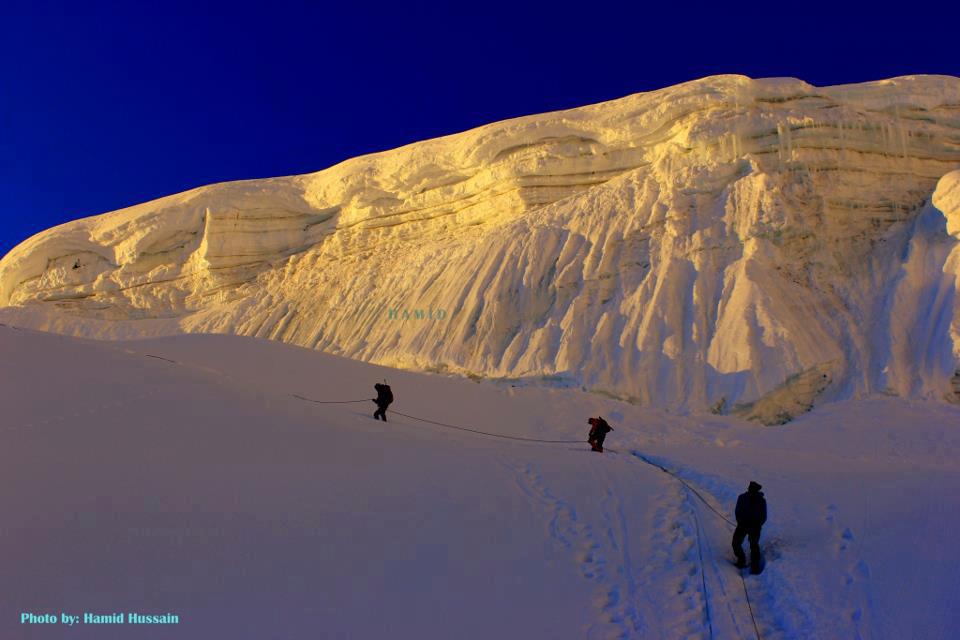
Nestled at the crossroads of Pakistan, Afghanistan, Tajikistan, and China, the Wakhi people of Upper Hunza represent one of the most fascinating yet least-known cultures along the ancient Silk Road. Their story is one of endurance, adaptation, and the preservation of a unique identity in one of the world's most remote and spectacular landscapes.
Who Are the Wakhi People?
The Wakhi are an ethnic group whose ancestral homeland is the Wakhan Corridor in the Badakhshan region of northeastern Afghanistan . Today, they are scattered across four countries—Afghanistan, Tajikistan, China, and Pakistan—with a total population estimated between 50,000 and 100,000 . In Pakistan, the Wakhi heartland is Gojal Valley (also called Upper Hunza), a vast territory stretching from the Hunza River to the Chinese border .
The name "Wakhi" derives from Wakhan, the narrow Pamir passage that formed a vital link along the Silk Road . The Wakhi call themselves Xik (meaning "inhabitant of Ox," an ancient name for the Amu Darya) and their language Xik-wor .
A Language of the Pamirs
Wakhi belongs to the Pamiri branch of the Eastern Iranian language family . It is closely related to Sarikoli (spoken in China) and Shugni, Rushani, and Ishkashimi (spoken in Tajikistan and Afghanistan) . With approximately 31,700 speakers worldwide, Wakhi is considered an endangered language .
The language has been preserved through generations despite the geographical dispersion of its speakers. In recent years, the Wakhi Tajik Culture Association (WTCA) has worked to record poetry, music, and oral traditions, while Radio Pakistan in Gilgit broadcasts a Wakhi-language program called "Sadoyah Boom-e Dunyo" (Voice of the Roof of the World) .
Guardians of the Silk Road
The Wakhi homeland of Gojal has served as a gateway between South and Central Asia for millennia. The Chinese pilgrim Fa-Hsien traveled through Gulmit along the Silk Route in the 5th century, making the settlement at least 1,500 years old . Later, the region witnessed the passage of traders, pilgrims, and armies—all leaving their mark on Wakhi culture.
The strategic importance of Gojal continues today. It is the only gateway between Pakistan and China, connected by the Karakoram Highway and the Khunjerab Pass (4,733m) . The Wakhi have historically served as custodians of this route, facilitating trade and cultural exchange between distant civilizations.
A Distinctive Way of Life
Traditionally, the Wakhi are pastoralists and farmers, surviving on the fruits of their fields and pastures . They maintain two settlements—one for summer and one for winter—and migrate with their yak, sheep, and goat herds to high-altitude pastures for up to six months each year .
Their traditional houses, built of stone and grass sod, are a testament to their ingenuity in surviving harsh mountain conditions . The Qirghiz Boi House in Ghulkin, the oldest house in the village, features intricately carved wooden pillars and doorframes with pre-Islamic symbols like a two-headed bird and stupa-like shapes . These carvings reflect the influence of Balti craftsmen who traveled from the east to work on forts, palaces, and mosques throughout Hunza .
Faith and Festivals
The Wakhi are predominantly Ismaili Muslims, a branch of Shia Islam whose spiritual leader is the Aga Khan . Their conversion to Ismailism dates to the 11th century, attributed to the Fatimid thinker Hakim Nasir-e Khusraw . Before Islam, the Wakhi practiced Zoroastrianism, Judaism, and Buddhism—traces of which still linger in their cultural practices .
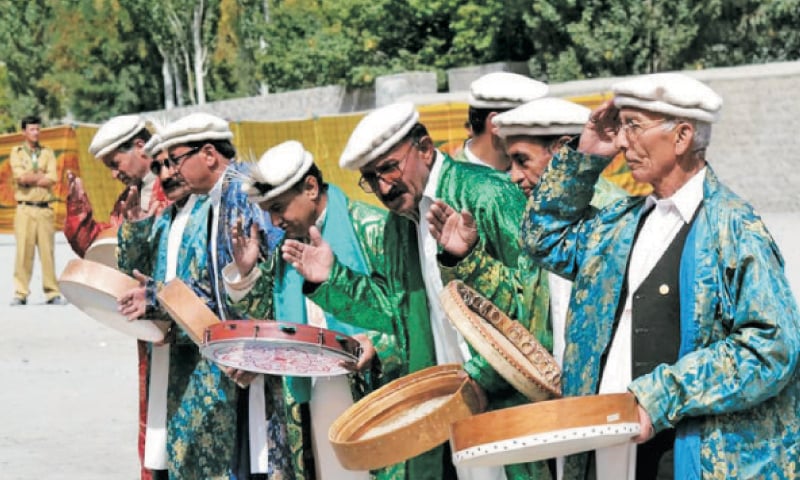
Nawruz, the Persian New Year celebrated at the spring equinox, remains the most important festival in the Wakhi calendar . The celebrations include khonagashtak (visiting each other), festive house-to-house visits, sacrifices, and the sharing of sweets and dried fruits . The khalifa, a local religious authority, determines the auspicious times for rituals based on ancient astrological texts .
Cultural Revival and Modern Challenges
In recent decades, the Wakhi have established numerous organizations to preserve their heritage. More than 26 organizations are registered in Gojal, including the Gulmit Art Council (which arranges traditional music and dance performances), the Gulmit Conservation Project, and the Wakhi Tajik Culture Association . The Carpet Center in Gulmit employs local women to weave carpets using pure sheep's wool and traditional designs .
The Aga Khan Development Network has played a transformative role in the region. The Aga Khan Schools operate in Wakhi areas, achieving nearly 100% literacy among children of both sexes . Aga Khan Health Services provides clinical units in several villages, though a centralized hospital remains absent . The Aga Khan Cultural Services has restored historic structures, ensuring that Wakhi architectural heritage survives for future generations.
The Enduring Spirit of the Wakhi
The Wakhi people embody the resilience of mountain communities who have thrived for centuries at the crossroads of empires. Their language, festivals, crafts, and architecture are living testaments to a culture that has adapted to change while preserving its essence. As the Karakoram Highway brings increasing numbers of travelers to Upper Hunza, the Wakhi face both opportunities and challenges—balancing modernization with the protection of their unique identity.
For those who venture to this remote corner of Pakistan, the Wakhi offer a window into a world shaped by the Silk Road, where ancient traditions endure amidst some of the most breathtaking landscapes on Earth.
Discover the Wakhi Culture with Hunza Adventure Tours. Explore the wonders of Gojal — Gulmit, Ghulkin, Passu, Shimshal, Sost, Khaibar, Jamalabad, Misgar, Chipursan Valley, and the historic sites of Upper Hunza — with our expert local guides. Contact us to plan your journey into the heart of the Wakhi homeland.